Last updated: October 2026
If you’ve been searching “IEM Singapore” on Reddit or TikTok, you’ve probably seen audiophiles praise hybrid drivers and insist you need a wire. An IEM (in-ear monitor) is an earphone that sits in your ear canal and seals out the world. A hybrid IEM uses two kinds of driver: a balanced armature for clarity and a dynamic driver for bass. In 2026, wireless earbuds use the same two-driver setup, so the real question is how you listen, not whether you plug in.
What is an IEM, and why do Singapore audiophiles love them?
IEM stands for in-ear monitor. Musicians started using them on stage to hear themselves over a loud band. The design goals were a tight seal, accurate sound and a fit that stays put while you move. The hobbyist market took those ideas and built a whole scene around them.
In Singapore, IEMs get a lot of attention for practical reasons. We spend a lot of time on the MRT, many of us work from home a few days a week, and the climate means anything in your ears has to handle sweat. An earphone that seals well and sounds detailed covers all three.
What does “hybrid driver” actually mean?
A driver is the tiny part that turns an electrical signal into sound. Most earphones have one. A hybrid earphone has two different types, and each one handles the part of the music it does best:
- Balanced armature (BA): a small, precise driver that is good at mids and treble. It’s what makes vocals sound clear, cymbals crisp and guitar detail easy to pick out.
- Dynamic driver: a larger diaphragm that moves more air. It handles bass and gives kick drums and basslines their weight.
On its own, a single dynamic driver can let heavy bass blur into the vocals. A single BA can sound thin at the low end. Putting both in one shell gives you clean detail and solid bass together. That’s why hybrid IEMs became the default recommendation in enthusiast forums.
Do wireless earbuds use the same hybrid drivers as IEMs?
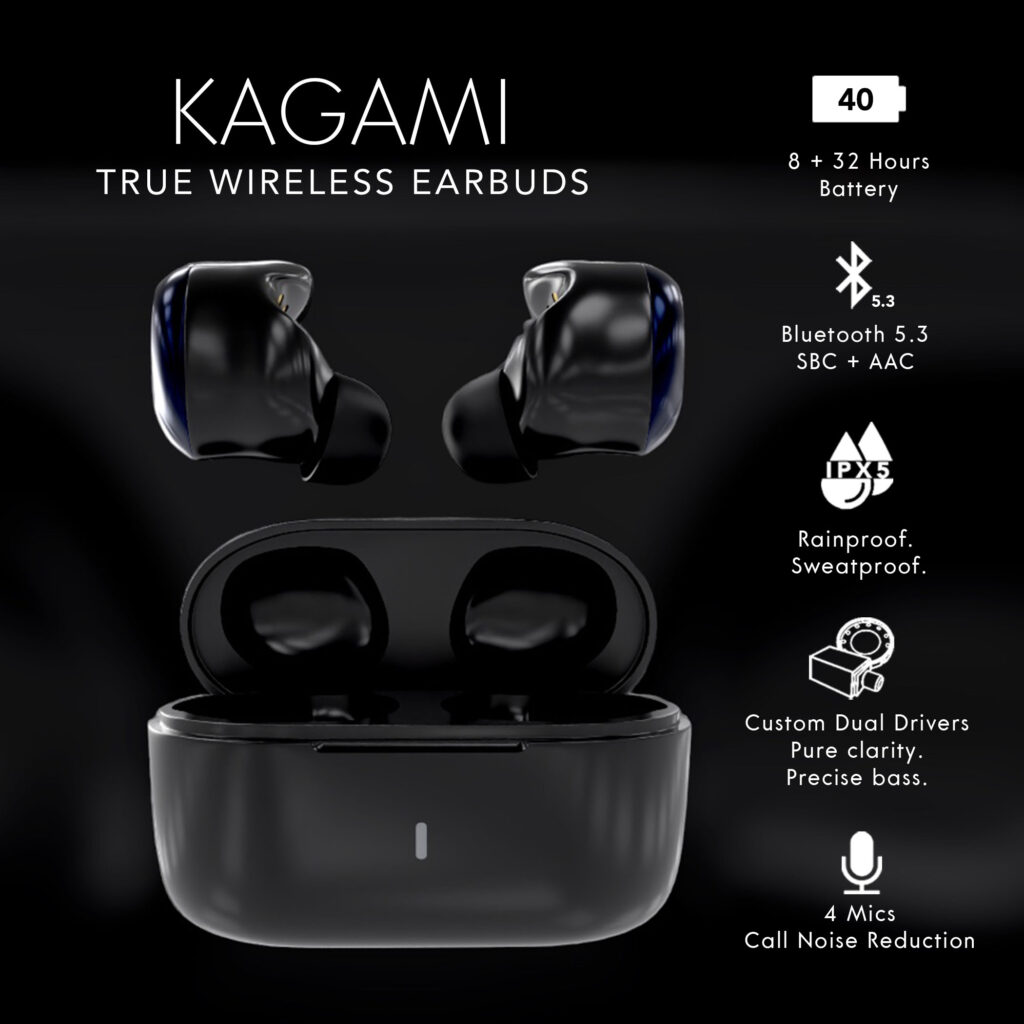
Yes. The two-driver idea isn’t limited to wired IEMs anymore. Kagami Wireless Earbuds by Zerest Audio use a dual hybrid setup: one balanced armature for clarity and one titanium composite dynamic driver for bass. That’s the same architecture that made hybrid IEMs popular, built into a true wireless earbud.
Wired and wireless now differ mainly in the signal path. A wired IEM gets its audio through a cable, and since most phones dropped the 3.5mm jack, that usually means adding a USB-C dongle. A wireless earbud gets its audio over Bluetooth, which compresses the signal. In a quiet room with a good source, a careful listener may hear the difference. On a crowded train or at the gym, most people won’t.
IEM Singapore buying guide: wired IEM or hybrid wireless earbud?
Choose based on where you actually listen. Here’s how the two options compare in three common Singapore situations:
| Situation | Wired hybrid IEM | Hybrid wireless earbud (e.g. Kagami) |
|---|---|---|
| MRT commute | Good seal, but the cable can snag on bags and gantries | No cable, and passive noise cancellation of up to 25 dB, rated for MRT and café noise |
| WFH deep focus | Strong choice if you sit at one desk with a DAC | 40 hours total battery (8h buds + 32h case) covers a full work week of sessions |
| Gym and outdoor runs | Cables bounce and pull, and sweat gets into connectors | IPX5 sweat and rain resistance, plus a Winglock design that keeps the buds in while you jump and move |
Go wired if: you mostly listen seated at home, already own a DAC, and want to collect and compare different sound signatures.
Go hybrid wireless if: you listen on the move, train at the gym, or simply don’t want to manage cables and dongles. You still get the BA-plus-dynamic sound that makes hybrids worth it.
Frequently asked questions
Is a hybrid IEM better than a single dynamic driver?
Not automatically, but a hybrid has a structural advantage. Splitting clarity and bass between two specialised drivers usually gives you cleaner separation, especially on busy tracks with vocals over heavy bass.
How much should I spend on an IEM in Singapore?
Most urban listeners in Singapore will be well served in the SGD 100 to 200 range. That budget gets you hybrid drivers, proper water resistance and battery life you can rely on for real commutes.
Are wireless earbuds comfortable for long WFH sessions?
That depends on weight and fit. Kagami is lightweight and built to be worn through long focus blocks, and the Winglock design keeps it steady without you having to push it deeper into your ear.
Get hybrid-driver sound without the wire
You don’t need a cable, a dongle or a four-figure budget to hear what hybrid drivers can do. Kagami Wireless Earbuds pair a balanced armature with a titanium composite dynamic driver, and add 40 hours of total battery, up to 25 dB of passive noise cancellation and IPX5 protection for SGD 119 (U.P. SGD 179).